Thursday, 23 July 2026

Make the Arabic your own-Learning Al-Kitaab Vocabulary: From Words to Real Communication-Lesson 1-5

 OER 

الكتاب في تعلم العربية -المفردات   L1- CLICK TO OPEN THE FILE 

L2

L3

L4

L5

Learning Al-Kitaab Vocabulary: From Words to Real Communication-Lesson 1

In this course, vocabulary is not simply a list of words to memorise. The aim is to help you understand new vocabulary, recognise useful patterns, and use the words confidently in real-life communication.

For each lesson, you will first meet the key vocabulary and its basic meaning. We then move from this initial shallow learning to deeper learning by exploring vocabulary in complete sentences and meaningful situations.

For each important word or expression, you will notice:

Meaning – What does it mean in context?

Pattern – What useful sentence structure can you reuse?

Grammar – What small grammatical point can you learn from the example?

Pronunciation – How should important words or sounds be pronounced?

Vocabulary connections – What other useful words can you build around it?

Try it yourself – How can you change the sentence to talk about your own life?

The goal is to move gradually from recognising vocabulary to using Arabic independently.

By working in this way, you will learn to Describe, Express, Explain and Participate (DEEP) in simple real-life situations.

Do not try to memorise every sentence. Instead, notice the pattern, understand how it works, and then make the Arabic your own.

Ahmed el-shareif .MA.FHEA

I teach this course at SOAS. on Saturday online 


Arabic Students’ Stories قصص الطلاب Arabic Reading and Writing . Free OER.

 قصص الطلاب 

Reading and writing . Free OER. https://opentext.ku.edu/qisas/


Qisas Attulaab (Students’ Stories) meets a vital need by offering a specialised resource to strengthen writing skills for elementary and intermediate Arabic learners in the classroom and working independently. Tailored for learners at Novice-High to Intermediate-High proficiency levels, it adopts a flexible and student-centered approach to support Arabic learners in developing and refining their writing abilities.

This book is inspired by the work of students from the University of Kansas and the University of Wisconsin-Milwaukee. It is carefully structured to support Arabic learners by beginning with simple, familiar topics—such as self-introductions, family, daily routines, and hobbies—and gradually advancing to more complex themes, including travel and personal experiences. The book aims to create an engaging and practical learning experience through relatable stories.

Reading is a collaborative process where the reader and the text come together to shape a shared understanding of social reality. This book addresses the difficulties foreign language learners often encounter in understanding perspectives different from their own. Incorporating texts drawn from American students’ experiences ensures the material is both relatable and accessible, fostering a smoother path toward developing advanced language skills.

https://opentext.ku.edu/qisas/

Friday, 12 June 2026


Introduction: Unlocking Arabic Through the Power of Song

Language is more than just grammar rules and vocabulary lists; it is the heartbeat of a culture. When we learn through music, we bridge the gap between academic study and emotional resonance. Songs provide a unique landscape for language acquisition—offering natural rhythm, authentic intonation, and a deeper connection to the poetic soul of the language.

In this blog series, we will explore the pedagogical power of song. By analyzing classic compositions, we can dissect complex sentence structures, uncover subtle vocabulary nuances, and practice listening comprehension in a way that feels immersive rather than instructional.

To accompany your learning journey, I have composed a piece in the style of Egyptian Neo-Classical music. This track aims to capture the grand, emotional depth often found in historical Arabic vocal performances. It features a lush string orchestra, the rhythmic pulse of the darbuka and riq, and the expressive, intricate melodies of the qanun and nay.

I invite you to listen to this track as you study the poem, focusing on how the phrasing and melodic swells highlight the emotional shifts within the lyrics. Let the music guide your understanding of the text.

I have also generated an original musical composition in the style of Arabic Neo-Classical music to help set the mood for your teaching blog. You can listen to it directly in the chat interface!

listen click to open YouTube  

Think & Discuss   click to open the PowerPoint 

Example: 


Thursday, 2 April 2026

Arabic Language .Ready to Level Up? Choose Your Path! 2026


Arabic Language .Ready to Level Up? Choose Your Path!

Whether you prefer the buzz of a physical classroom or the comfort of your own home, we’ve got you covered this April. We are thrilled to offer two distinct ways to join our upcoming course:

  • The In-Person Experience (Clerkenwell) Join Sawsan Askoul at our Clerkenwell Campus for an immersive, hands-on evening session. Perfect for those who love face-to-face networking and campus life.

  • The Digital Classroom (Online) Prefer to skip the commute? Join Ahmed El-Shareif online for a high-energy, interactive virtual session that fits perfectly into your midweek schedule.

Big News: We’re Expanding!

Join Ahmed El-Shareif online 

Due to popular demand, we are thrilled to announce a third study option starting this April, featuring the acclaimed "Ahlan wa Sahlan" textbook series from Yale University Press. 

Saturday, 28 March 2026

Friday, 24 January 2025

Learning Arabic with Aljazeera Media Institute (FREE). تعلم العربية مع الجزيرة

 ALJAZEERA MEDIA INSTITUTE 

LEVEL TEST    ( reading test, vocabulary test, beginners test, intermediate test, grammar test.)

Each test will open in a new page. Take your time, then select your level now, and begin learning.

LESSONS الدروس  ALL WITH  INTERACTIVE EXERCISES AND FEED BACK

Level A1. WITH 3 INTERACTIVE EXERCISES AND FEED BACK

قائِمَةُ الحُروفِ والأصْواتِ العَرَبِيَّة Arabic letters and sounds

OTHER ACTIVITIES-INDIVITUAL LETTER

INTRODUCTORY LEVEL A1-A2 

  LEVEL B1-B2 

BEGINNER

ELEMENTARY

 Other level:  intermediate  , Upper Intermediate , Advanced , Proficiency


Friday, 23 August 2024

Arabic Alphabet Sounds & pronunciation


This presentation introduces the Arabic letters and their sounds. It was created by one of my favourite teachers, whose work my students and I always enjoy. If you see “Video not available” on the black screen, simply click “Watch on YouTube” to view it directly. You can also find his other excellent presentations on YouTube. Thank you, Shereef, for sharing such valuable resources.


https://www.youtube.com/watch?v=IguA1LnXZh8

Monday, 8 January 2024

Ahlan Wa Sahlan -Lesson 1 -هالة في غرفة الصف

 Open Education Resource 

click here 

هالة تتكلم عن غرفة الصف  

 Lesson 1  click to hear  the audio and see the video 

Reference Ahlan Wa Sahlan  isbn 978-0-300-12272-5

This video licence under CCBY licence 


Monday, 6 November 2023

Arabic active learning محمود يصف شقته في القاهرة


Level A1+
Unit 7. Video Mahmoud describes his apartment.
محمود يصف شقته في القاهرة
Task 1: Pre-listening discussion: content
The title of the video includes the word describe يصف.
What ما description الوصف do you predict تتنبأthe speaker will mention  سيذكر?
Task 2: Pre-listening discussion: language
here are key expressions selected from the video:
قريبة مِن          أول الشارع         لأني               الآن        ليس هُناك           
discuss their meanings with another student. If you need to, check them in a dictionary or ask  Google https://translate.google.com/?hl=ar  then share your knowledge via comments section.
Task 3: Watch the video as many times as you like then see if you can answer the following questions:
أين شقة محمود؟
ما اِسم النهر؟
ما اسم الشارع؟
هل في الشقة تليفزيون؟
هل في الشقة أنترنت؟
أين يسكن محمود الآن؟


Source; Mastering Arabic 1-unit 7
Google translation:https://translate.google.com/?hl=ar

Monday, 2 October 2023

Learn Arabic Online | Learn Arabic in London. At City University of London.

ONLINE -USING ZOOM  -CITY UNIVERSITY OF LONDON -

Evening Classes -Join us from any where from the world (London time).

https://www.city.ac.uk/prospective-students/subjects/arabic

Tutor: Ahmed el-shareif (MA -FHEA) 

Textbook Ahlan Wa Sahlan 

Year 1  beginners-letters and sound 

Year 2  lower intermediate  

Year 3  intermediate 

 Choose from full year (saving £ ££3) , or just one term .

Learn Arabic Online at City University of London.

 On other words:

  • The tutor's  has a Master of Arts degree in teaching Arabic and is a Fellow of the Higher Education Academy (FHEA). Any questions email me : ahmed.el-shareif.1(at) city.ac.uk. or   ae2(at)soas.ac.uk.
  • The textbook used for the course is Ahlan Wa Sahlan.
  • Year 1 of the course will start on October 4, 2023 and will cover the basics of Arabic, including the letters and sounds, as well as the first 5 lessons of the lower intermediate level. Full sullabus 3 terms. 
  • Year 2 of the course will start on October 10, 2023 and will continue covering the lower intermediate level. Full sullabus 3 terms.
  • Year 3 of the course will start on October 12, 2023 and will cover the intermediate level. Full sullabus 3 terms.

L

Thursday, 3 August 2023

الموارد التعليمية المفتوحة- اللغة العربية Open Education Resources-Arabic


If you are teaching Arabic using Al-Kitaab, you will discover that these  teaching resources will prove to be extremely useful.

If you're interested in accessing videos, sample lesson plans, and additional materials that correspond to each of the third edition books, all you have to do is click on the links provided below.

الموارد التعليمية المفتوحة Open Education Resources

However the author did not classify that these resources under CC license. So copyright applies.

Examples  

Alif Baa Teachers’ Resources

Arabic learning resources الأوزان The Arabic Verb form

 Arabic learning resources

The Arabic verb forms   الأوزان

Most Arabic words are derived from a three-letter (trilateral) root. Click the link to know more. 

Introduction to the Ten Arabic Verb Forms | Part 1-Watch 

More from Arabic 101 BUT NOT ALL ARE FREE 


Thursday, 25 May 2023

The FSI & DLI Arabic general Courses


The FSI & DLI Arabic general courses

All the FSI, DLI and Peace-Corps content is public domain. This site is not affiliated in any way with any government entity.


This link will take you to Archive download .

Also Arabic Grammar Resources 

Thursday, 27 April 2023

Modern Egyptian Arabic -Verb Tenses


 Modern Egyptian Arabic

These open education resources created by Arabic desert  then I changed them with Microsoft Sway. Enjoy ! 

Ahmed El-shareif (FHEA, MA in teaching Arabic as L2/ AFL)


Sunday, 26 March 2023

Marhaba! An Introduction to Modern Standard Arabic textbook.

Open Access: New Arabic Resource from Australian National University

Marhaba! An Introduction to Modern Standard Arabic: Part 1 (epub, 109.1MB) and Part 2 are freely available textbooks designed for self-study and home revision. Comparable to Ahlan wa Sahlan. Marhaba offers lessons , referring to them as chapters.

The Marhaba textbook, available in epub format, includes video and audio content that can be accessed using a multimedia-enabled epub reader.

Here are the links to both parts:


Monday, 13 March 2023

Arabic Language Teachers and Students

 To Arabic Language teachers 

Ready to start adapting OER?

Read more about 

The Arabic Learners Written Corpus-Free OER

 The Arabic Learners Written Corpus

The Arabic Learners Written Corpus is an extensive Arabic learner collection comprising many written samples produced by L2 and heritage students, collected over 15 years of teaching.Description: Developed by Dr. Samira Farwaneh (University of Arizona), this extensive Arabic learner corpus comprises numerous written samples produced by L2 and heritage students, collected over 15 years of teaching. They were transcribed into a database with cross-referenced categories according to level (beginning, intermediate, advanced), learner (L2 vs. heritage), and genre (description, narration, instruction). The corpus serves as a source of empirical data for hypothesis testing as well as a resource for developing materials for teaching Arabic. A Spring 2010 workshop/demonstration took place at the Western Consortium of Middle East National Resource Centers’ Language Workshop.

This project is a collaboration between the Center for Educational Resources in Culture, Language and Literacy (CERCLL) and the Center for Middle Eastern Studies (CMES) at the University of Arizona, and the Center for Advanced Language Proficiency Education and Research (CALPER) at Pennsylvania State University.


Reed more 

Saturday, 11 March 2023

Read, Learn and Play Arabic .OER /OEP

 I attended today's conference  https://www.coerll.utexas.edu/coerll/ and here is the second Arabic OER  and IT IS FREE .

https://campuspress.yale.edu/readlearnplayarabic/

Thank you Sarab Al Ani  and Elisabeth Shovers

Describtion: 

Read, Learn and Play: Online Interactive Arabic Reading Materials provides original reading texts as shareable eBooks alongside virtual online practice activities. The authors ( Sarab Al Ani  and Elisabeth Shovers) designed the materials according to the Comprehensible Input (CI) theory and the Teaching Proficiency Through Reading and Storytelling (TPRS) method. They aligned the resources to novice, intermediate and advanced ACTFL proficiency benchmarks and are designed for non-heritage K-16 language learners. They created this project with support from the U.S. Department of Education’s International Research and Studies Program.

Just click and learn https://campuspress.yale.edu/readlearnplayarabic/

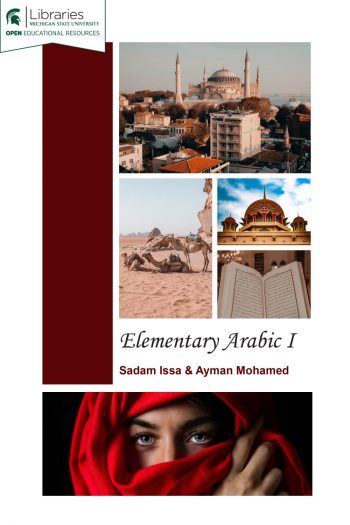
Elementary Arabic I


Inclusive Pedagogy in LCTL Classrooms: Implications from Arabic OER
Ayman Mohamed, Michigan State University
Sadam Issa, Michigan State University

https://openbooks.lib.msu.edu/arb101/


Authors:Sadam Issa and Ayman Mohamed

Book Description:This is an open textbook on Beginner Arabic for undergraduate students who are taking Arabic in their first semester. It addresses letters and sounds of Arabic along with basic skills in reading, speaking and writing. The book can be used as a self-study resource or as the main textbook in beginning Arabic classes.

Monday, 20 February 2023

كيف تصف البلاد العربية؟ How would you describe the Arab countries?

Adjectives in context 
كيف تصف البلاد العربية؟ 
How would you describe the Arab countries?

Resource الكتاب في تعلم اللغة العربية lesson 1

Level A1+
Click, Listen and Repeat.https://youtu.be/WBO94KXpV9M

Extract the meaning of:  - بعيد عَن - قريب مِن - كبير- صغير

الدولةالوصف
العراققريبة من السعودية
الكويتصغيرة
البحرينصغيرة
قطرقريبة من البحرين
الإماراتبعيدة عن الجزائر
عُمانقريبة من اليمن
اليمنقريبة من السعودية
السعوديةكبيرة
الأردنبعيدة عن تونس
سوريةبعيدة عن المغرب
لبنانصغيرة
فلسطينقريبة من سورية
مصرقريبة من لبنان
السودانكبيرة
ليبياقريبة من تونس
تونسصغيرة
الجزائركبيرة
المغرببعيدة عن اليمن

==================================


نطق اسماء البلاد  


Saturday, 24 December 2022

Monday, 10 May 2021

Arabic words in media

 Arabic words in media 

Level: Beginners 

Arabic https://ar.wikipedia.org/wiki/%D8%B1%D9%85%D8%B6%D8%A7%D9%86

 English https://en.wikipedia.org/wiki/Ramadan


Chinese missile


https://www.bbc.com/arabic/middleeast-57009496


A Jewish settler (right) and a Palestinian protester (left) in the Sheikh Jarrah neighborhood of Jerusalem

Al Jazeera Arabic Live الجزيرة البث الحي | البث المباشر

Sunday, 20 September 2020

Teaching and Learning Second Language Listening.Metacognition in Action. Metacognitive Approach to Listening

Amani  from Egypt shares this video and talks about her trip 
 Metacognitive Listening Strategies. 
1-Pre-listening predict the correct sequence or the correct answer to questions. 
Where did Amani go last summer (place)? with whom (person)?what did she study?where?how? what did she see?


 1-Pre-listening predict the correct sequence or the correct answer to questions. 
Where did Amani go last summer (place)? with whom (person)?what did she study?where?how? what did she see?

 2- First listen Verify your initial predictions.
 Compare your answers with a partner. Modify as required. Establish what still needs resolution and decide on what will require special attention. 

3- Second listen Verify points of earlier disagreement, and make any required correction.
 
4- Third listen (final verification stage) 
Listening to specific information which you were not able to decipher earlier. 

5- Reflection and goal-setting stage
Individual or class discussion of strategies used to determine the correct sequence of answers and reflection on goals for the next listening activity. 


Now watch the video and verify your predictions and folow the steps of listening strategies

6- Extension Activity.Listening diary: Students write an entry in their listening diary to describe their experiences and lesson learned about listening. Predicting and working with other.
Source Mastering Arabic unit 14 (YOU TUBE).  Google Images  under ccby listence 
Teaching and Learning Second Language Listening. Metacognition in Action (ISBN 978-0-415-88372-6)